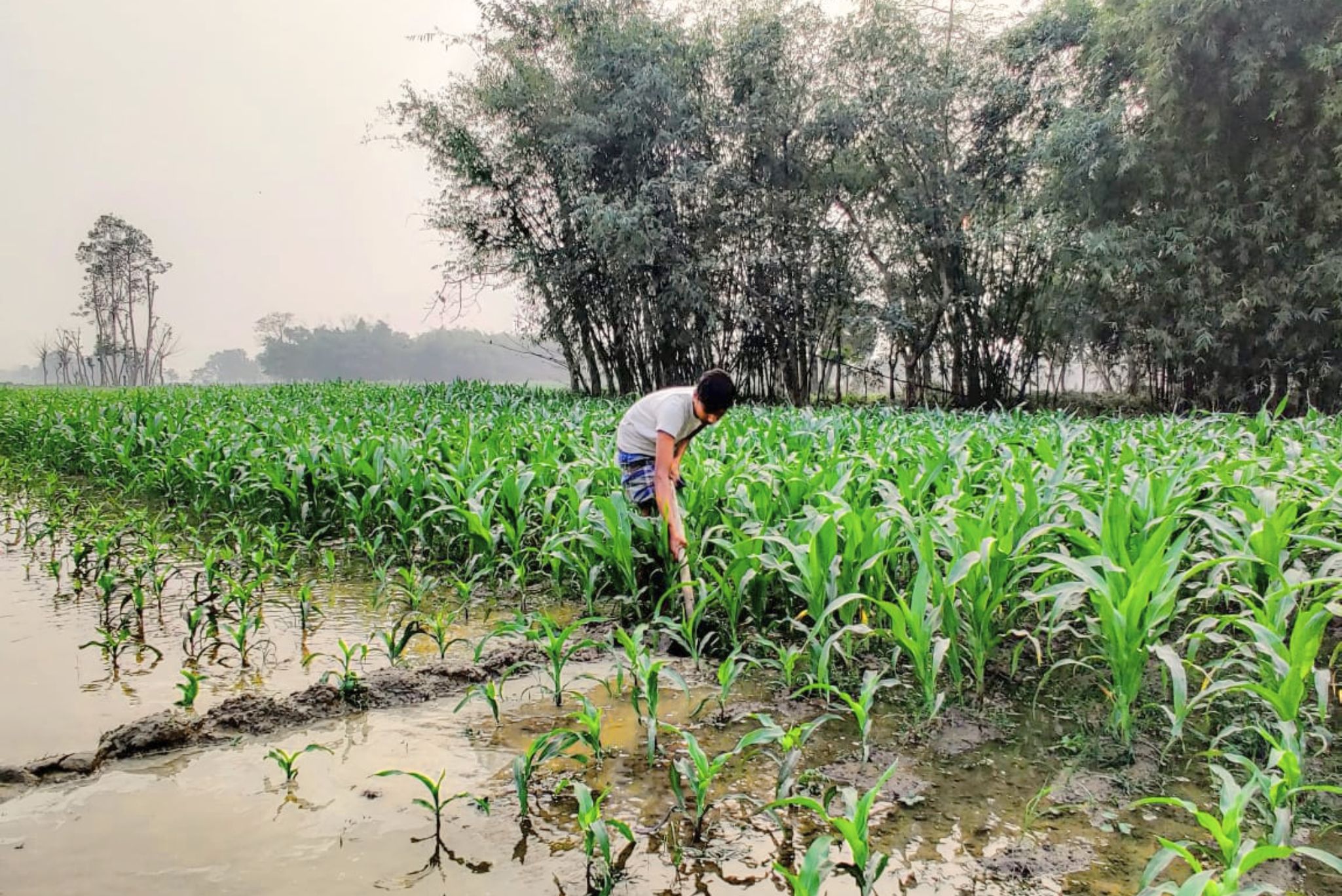
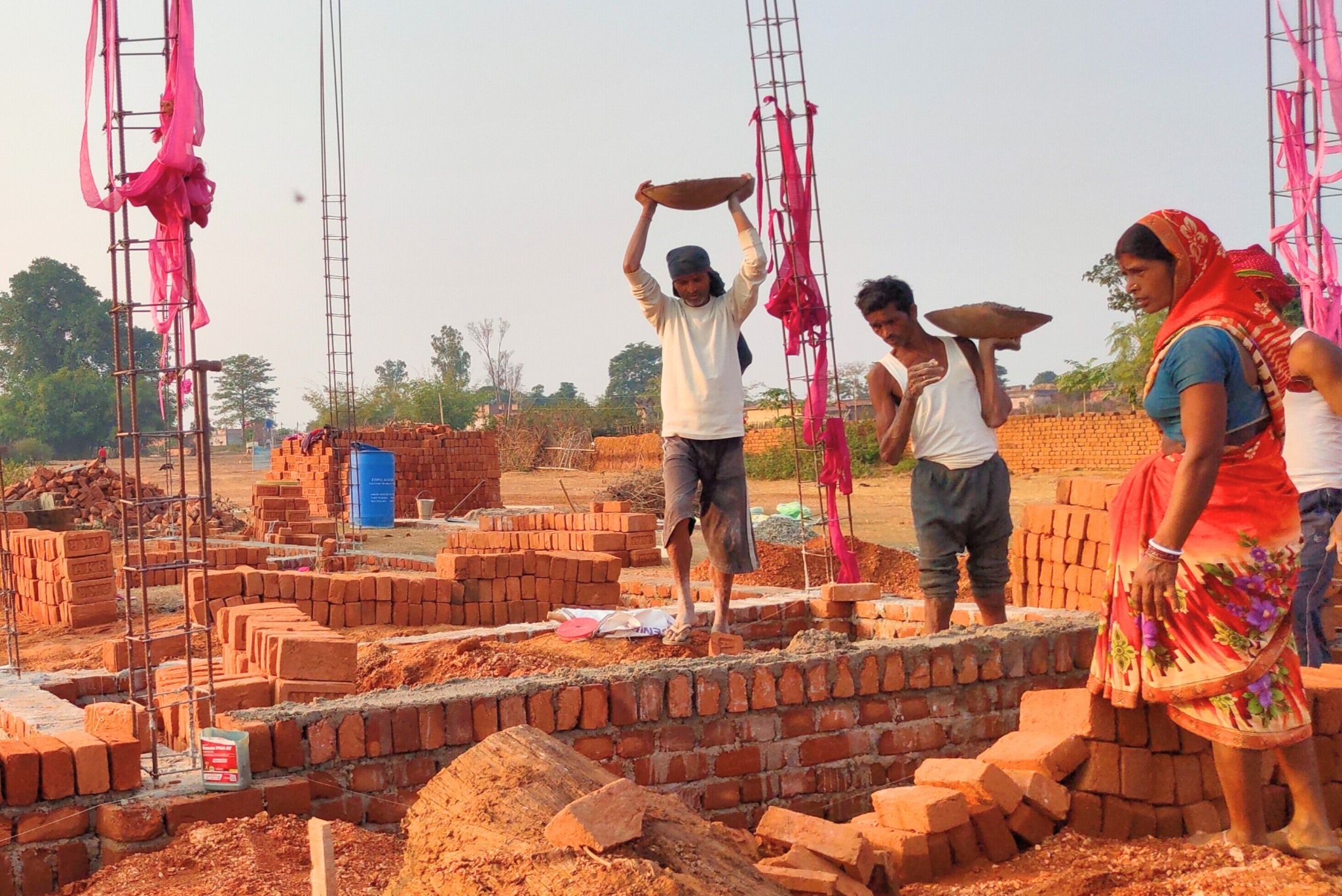
With an unequal concentration of employment across the country which is regularly marred by natural disasters such as floods and earthquakes, migration shows up as an opportunity to earn a livelihood outside of caste-inducted occupations (such as Kumhars working as potters and Lohars working as blacksmiths, among others) and sustenance based agriculture which is difficult to monetise due to low market value of the products and a lack of control over market linkages. The reasons for migration can also be socio-political, where individuals choose to leave on the grounds of a certain political environment or strife and to escape the oppression of individual and community limitations that are imposed on them by the caste system.
Who are the waste-pickers of Lucknow?
Miya Muslims, who hail from Barpeta town of lower Assam, have taken to developing a door-to-door waste collection and management in Lucknow. Across various literature, the number of these Bengali Muslim migrants ranges from more than 30,000 to over 90,000 people who have created their slum areas within the vicinity of Lucknow city as they work as rag pickers or waste pickers, employed by contractors, called “thekedaars” who play a major role in the migration process as they are the ones who employ and facilitate the migration of these people from Assam. Although they claim they come from lower Assam, there is a possibility that some of them can be immigrants from Bangladesh, but there is no documentary proof to establish that they are not Indians. They are part of the informal sector and contribute positively to society as informal waste pickers who keep the city and the environment clean, and yet they are often treated like foreigners. The people around them believe them to be Bangladeshis, including the police and also the Valmiki caste community who previously used to work as sanitation workers. In Lucknow, they are “outsiders” who are subject to regular police verification, but for the public, they are only kudawallas and kabadiwalas (waste- pickers and waste contractors).
What Does the Work of Waste Pickers Entail?
Waste pickers work under the public-private partnership (PPP) model under the Jawaharlal Nehru National Urban Renewal Mission (JNNURM). This setup leaves out a large number of waste pickers who are not working under any organisation and are working in their independent capacity. While several institutions have attempted to organise and unionise these waste-pickers, such a case has not reached Lucknow. These informal workers form the backbone of most urban spaces as the groups who undertake essential city services. These waste-pickers gather household waste in specified zones, sorting recyclables that they sell to their contractors, who offer logistical support. These contractors then sell the recyclable materials to recycling agencies both within and outside the city.
Despite contributing to essential city services, waste-pickers lack access to basic services, rights, and a platform to voice their concerns. In addition to their lack of incorporation under government policies, their slum has no basic amenities, their children go to private schools, and their wives work as domestic workers in the nearby housing complex as was found during the field survey. We were told that females don’t go out to collect waste, rather it’s only men who do it. Female members help in sorting out the wastes collected as they are later sold to contractors as scrap material. Plastics, cardboard, bottles, and glass are segregated and kept in bundles for reselling.
Impact of Gender in this Occupation
The waste-pickers segment has its own hierarchies, as studies have found that women who engage in this occupation are often placed worse than their male counterparts. Their husbands often work as door-to-door waste collectors and have access to Thelas, contrary to the women who both pick waste and move on foot. In addition to their eight-hour workday that begins at 5 AM, they have to undertake segregation of waste to sell to contractors, as well as the burden of gender responsibilities of reproduction, childbearing and rearing among others. Besides these considerations, there is also the constantly perceived threat of unsafe spaces, harassment, and abuse during their work, forcing them to invisibilise themselves to “not attract any attention”. Another challenge for them also includes the difficulty of finding work outside of waste-picking as Bengali-speaking Muslims are often termed “Bangladeshis” or “Bidesis” (foreigners) and lack any formal education or experience on paper.
The Challenges of Identity among Miya Muslims
Assam is one of the most prominent states affected by the immigrant politics born by the colonial past and now has materialised into questions of statehood and citizenship.
Despite being Indian citizens, they are often subjected to doubts regarding their nationality, as evidenced by the category of “Doubtful Voters” in electoral lists. The fear of being labelled as foreigners influences their voting behaviour, reflecting a broader struggle for recognition and acceptance within society. While migration is a mode adopted as a way to gain employment and move out of poverty and identity-led harassment, this move has not given them a life of respite from the imminent fear of statelessness.